Here is the limited edition Fuckfest (remastered)/12 Galaxies albums from the psychopaths of Oxbow. Fuckfest is all cleaned up, with a little added acoustic track (which happens to my all time favorite song from Oxbow), The Valley. The second album, 12 Galaxies, is an all acoustic set in San Francisco (album named after the venue played "12 Galaxies").
Fuckfest is as great as the original (I think better, the production is well balanced and the extra track is stunning), and the 12 Galaxies all acoustic experience is like nothing you've ever heard from Oxbow. Very doped out and seemingly on edge, but not near the sweaty genitals in face approach Eugene enjoys so much. Could be a valuable entry album for those who haven't listened to Oxbow yet, may serve as the only album a non-Oxbow fan can tolerate, or could be the most frightening piece of humanity one has heard through acoustic instruments, you be the judge.
"The Book of Knots is ex–Pere Ubu bassist Tony Maimone, with the aid of ex–Skeleton Key member Matthias Bossi, ex-Swan Norman Westberg, current Mekon Jon Langford, Sleepytime Gorilla Museums and 2 Foot Yards Carla Kihlstedt, and a slew of other like-minded musical family members. The Book of Knots is a seamless ride through a perfect Swans-derived squall: early-'80s-derived sturm and drang, with the occasional no-wave guitar solo and/or feedback that sounds like a seagull fight in a Dumpster behind a clam shack.
Underwater strings, pipe organ, shortwave radio transmissions, and banjos add a swirling, seasick undercurrent to the satisfying thwack of drums, bass, and guitar. For a pickup band, the voices heard from complement each other nicely: Langford's drunken sailor, Bossi's expansive (and pretty!) wailing, and Carla Kihlstedt's unhinged widows all walk through the song "Tugboat"; and the bass-heavy Cro-Magnon crunch of "Crumble" and "Boston to Bombay" are even better. Rockers who attempt sea chanteys usually make them sound like Weill-esque elegies to heroin, but the best songs here are as big and bottomless as the deep blue, with just enough added saltwater taffy sweetness to pull you into their wake."
The album morphed organically from a few musicians in the studio recording material they had written with a nautical, narrative, conceptual theme in mind, to a collective of featured artists. The artists on the album are all inter-connected by bands and friendships and circumstance. No one was commissioned so much as drawn-in through the circles of connectivity. Well over 40 different instruments can be heard on the album. The songs are woven together creating a tale of longing, despair, loneliness, mortality. The narrative is a labyrinth of connections, or knots, tying each segment of the story to the sea.
This is easily my favorite concept albums of the last decade, tales of the wrenching experiences of seamen and the unforgiving beast of our seas. You can smell the salty dankness below deck filling up with the thickening foul stench of freshly hunted whale oil burning in there lamps. The maddening cries of disheartened sailors rings inside the ribcage of the vessel, drinking away sorrows of friends submerged and rotting in the abyss.
Just as soon as the stars through your sextant tell you land is near, waves rip through your ship and swallow your crew. Lungs explode with salt water, crew dismembered and chewed by sharks. Somehow you make it to dry land, yet your nightmares of the sea are ever present and cannot be drowned away with the bottle.
" Initially released on vinyl in 2007 and then on CD the following year, Group Doueh's first formal album as such is actually a compilation drawing on literally decades of work by the band, led by Doueh himself, whose approach can be summed up (if somewhat oversimplified) as traditional music from his Western Sahara homeland, called Sahrawi music, played through the lens of classic '60s and '70s rock and funk, with Jimi Hendrix and James Brown mentioned by Doueh as particular touchstones. Doueh's spindly, often mesmerizing guitar performances perfectly capture the balance between the past and present that Sublime Frequencies looks for in general, so it's no surprise to see them behind the release of the collection; filmmaker Hisham Mayet sought out Doueh in his home city of Dakhla and recorded two of the selections, while the rest come from Doueh's tape archive, perhaps roughly recorded but no less powerful for that reason. The music is performed by the core quartet of Doueh, his wife Halima (vocals and tbal, a drum), their son Jamal on keyboards, and another singer, Bashiri, and the eight tracks showcased all rapidly establish the band's aesthetic for even a casual listener. Halima's high, clear singing rides above the loping guitar figures of her husband, alternating between core melodies and open-ended explorations that always stick to the groove; this is not a band supporting a soloist, but an ensemble. "Fagu" may begin with one of Doueh's most entrancing pieces, his guitar sounding like a snaky drone that then stops and starts almost like a glitch, but the vocals swirling around the music take it to a further level of beauty, while "Dun Dan" wouldn't be what it is if you couldn't hear Jamal's electronic beats punching through the performance at points. If "Eid el Arsh" is the group at its most exultant, the team of Halima and Doueh in full flight, then "Tirara" demonstrates the calmer side, Doueh's low-key work supporting the back and forth of Halima and Bashiri's handclaps and soft drumming. "
The first of a strong trio of bands I know of from the Western Saharan region that I'll throw up here. Hearing the greats (Jimi Hendrix and James Brown) trickle down into the Saharan is quite a trip when infused into traditional Sahrawi music.
This will take you for a wild ride, bring plenty of water.
"These three men use their cover art to present themselves as fleshy gods. A Roman warrior effortlessly holds a swooning woman in one arm, while his other arm carries a bronze shield. Against a majestic and blue-tinted mountain backdrop, a blindfolded alchemist lifts a compass to the wind. Above a gold-painted rune, a knight bends his reverent head down to the hilt of his sword. The scene bleeds with grandeur, valiance, and chivalry. It is a wide-angle panorama of epic lore, vaguely mystical and vaguely biblical. This cover bellows its canyon-deep wail across centuries, beating its broad chest with the significance of the ages and the weight of victory and death. It’s silly as fuck, but it’s huge.
Book of Sand is much the same way. The album’s genius lays sprawled across the 22-minute, three-part Century Trilogy. Chamber strings circle and crouch, then leap up into gnarly crescendos of Wagnerian sturm und drung. In moments where many instrumental post-rockers would choose to drape textures of gauze and mist, the men of Tarantula A.D. beat divots out of stone, and chisel the mountainside. There’s nothing subtle or genteel about it, and this virile bluntness is a refreshingly honest whiff of musk.
By the way, that guitar riff that ties together the Century Trilogy? It’s a lumbering behemoth. A lead-footed yeti trampling woodchucks without hesitation or remorse. It’s the kind of riff that Robert Fripp would have over for supper. Never mind that these guys are classically-trained musicians who double and triple on cello, piano, xylophone, and any number of other orchestral tools. It may be prog. That’s not the point. The point is that they want to shoot in 70mm. They want to carve a bigger Rushmore, and chronicle the titans. Their tangents into flamenco and ambient music subtract from any sense of cohesion, but these wanderings are the products of a playful eclecticism, never showy displays of empty virtuosity.
Like their labelmates in Dungen, they don’t apologize for their broad strokes. This music does not feel self-conscious at all. When CocoRosie’s Sierra Cassidy shows up to sigh the sylvan lullaby on "Sealake," or when the loping whistle hushes the crickets of "Riverpond," there are a few twinkling moments of transcendent beauty, sure. But it’s just the calm before the swordfight.
When the words "classically-influenced instrumental rock" show up, I usually expect glaciers and sloooow builds. Tarantula A.D. surprised me by resisting the delicate, and avoiding those repetitions and cerebral swells. This is restless, foul-breathed, woodchuck-stomping yeti music, and I can get with that."
Now formally know as Priestbird, the trio crafted this piece that has held its place as one of my favorite albums of all time. One of the most colorful and interesting listens that the whole family can enjoy.
"This collection includes the 1983 album Filth and various studio out-takes and live recordings from 1982 to 1985, originally released as Body to Body,, Job to Job.
From the center of New York's celebrated downtown music scene emerged a most ugly ducking, the Swans. With a sound like a ditch witch stuck in a tar pit, in 1982 the Swans were the height of noise. Musically, it would be termed proto-industrial, proto-noise rock, but aesthetically it was a sound shot through the axes of power. Strung between the poles of domination and submission, the Swans created a music with a sexually dark, malefic vision of society as despotic and individuals as subjugated to the point of dissolution. This double album, part of a planned series of reissues, captures the Swans at the beginning of their career. The first CD contains their earliest album, Filth, along with a previously unreleased live performance at the Kitchen. It's a classic album and, even though the quality isn't great, sounds more uncompromising live. The second consists of unreleased studio tracks, tape experiments, and live recordings from 1982 through 1985, providing an interesting balance to the "finished" compositions of Filth. It shows Michael Gira et al. testing the limits of their sound, exploring new directions, and laying the groundwork for future albums."
"It is not overstatement to say that any project associated with John Zorn's Masada ensemble, an acoustic jazz quartet that marries Klezmer themes to free-jazz adventurousness, is worth hearing, and will most likely be excellent. This is certainly the case with this album of solo guitar performances of Zorn's Masada compositions. The pieces showcase the virtuoso skills of three of modern music's most individual six-string talents: Bill Frisell, Tim Sparks, and Marc Ribot, each of whom take turns offering meticulous, passionate readings of Zorn's charts.
Interestingly, there are few of the "outside" tendencies that characterize both the Masada quartet and the trademark styles of the guitarists. Ribot's jagged skronk and Frisell's familiar shower of guitar effects, for example, are few and far between (Frisell's fragmented electronics romp on "Katzatz" is an exception). Instead, the presentation is largely acoustic and remarkably straightforward, with each performance approximating the precision and studied grace of a classical recital. Nearly every track is superb, with Sparks's dizzying metrics on "Ravayah" and Frisell's exquisitely delicate "Elilah" among the highlights. Apart from the stunning musicianship, one has to marvel at the force and sophistication of Zorn's writing. This unique and gorgeous music should appeal to a wide range of listeners."
"This album is full of energy with flawed but nevertheless excellent versions of songs like "These Days," "Shadowplay," and the sped-up version of Joy Division's hit song, "Love Will Tear Us Apart," but also has its quiet and introspective moments with "New Dawn Fades," "A Means to an End," and the closing song, "Atmosphere." The album is chilling, like looking at a moment in time so ideal and good-natured that you know ends badly. The silent moments are deafening, the quieted roar of the crowd, the occasional chants of "Joy Division!" by the Amsterdam audience. You know something's wrong. The album's sound quality slowing deteriorates, with Curtis' voice becoming more and more distant and the drum beat more and more pronounced until the album finally fades into fuzz 16 tracks later. The familiar baritone voice is nearly unheard in "Dead Souls." Whereas this would be a detriment to other groups, this technological failure only strengthens the emotions in the CD, symbolizing Curtis' departure from the band and the world"
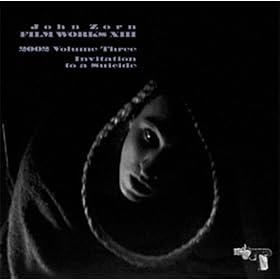
“John Zorn (born September 2, 1953 in New York City) is an American avant-garde composer, arranger, record producer, saxophonist and multi-instrumentalist. Zorn's recorded output is prolific with hundreds of album credits as a performer, composer, or producer. His work has touched on a wide range of musical genres, often within a single composition, but he is best-known for his avant-garde, jazz, improvised and contemporary classical music. Zorn has led the punk jazz band Naked City, the klezmer-influenced quartet Masada and composed the associated 'Masada Songbooks', written concert music for classical ensembles, and produced music for film and documentary. Zorn has stated that "I've got an incredibly short attention span. My music is jam-packed with information that is changing very fast... All the various styles are organically connected to one another. I'm an additive person - the entire storehouse of my knowledge informs everything I do. People are so obsessed with the surface that they can't see the connections, but they are there."”
Zorns connections are laid out as clearly as they ever will be in this record, easily one of his most accessible and mild mannered albums (excluding song "Unjust Reward" from said comment). This soundtrack is the musical narrative of the film "Invitation Suicide", a dark comedy about a son trying to save his father in the hospital by charging people money to see his suicide. There are 10 core songs in the album, each one arranged differently to create a paralleled multi-layered walk that becomes more recognized and proportionately different as the album progresses, akin to taking a stroll through a familiar park with the seasons changing in front of your eyes. My favorite work I've heard from Zorn yet.
"Sterling, Virginia's Pygmy Lush's debut album serves as the culmination of every influence these young men have ever had, all wrapped around each other in what essentially sounds like a seasoned band covering a solid mixtape. Bitter River's 14 songs span nearly the entire underground/independent music spectrum, ranging from tracks that sound like The Black Heart Procession to Born Against to Tom Waits to The Jesus Lizard to Bob Dylan to One-Eyed God Prophesy to Nirvana to... you get the picture, right?"
Just when you think you've got a grip on a song, you're pummeled by the next. At a loss of words for these guys which usually means they are really fucking good.
"In the days of Bach, Brahms, and Beethoven, composers used vernacular rhythms and tune styles to create something transcendentally new. That seems to be missing in much contemporary music. But Carla Kihlstedt and her 2 Foot Yard band merge fusion jazz, rock, Bulgarian-style vocals, Felliniesque vignettes, quirky Laurie Anderson-type currents, and other world, folk, and pop streams into a new sound that inventively straddles the classical and vernacular worlds without compromise to either side. Kihlstedt is a monster virtuoso on numerous instruments, a truly original songwriter, and an inventive, singular artist on a par with Arto Lindsay. If classical music has any hope of connecting with modern audiences, Kihlstedt’s battle charge will point the way."
From the moment I heard Sleepytime Gorilla Museum, I fell head over heals for Carla Kihlstedt. She is easily the most innovative, passionate, and visionary female artists I have ever heard. I'm pretty convinced I could settle down on a farm with her and die a happy man. Unfortunately or me, she recently had a beautiful baby girl, so I wish her the best for an enriching life as a mother.
ANYWAYS, her music is absolutely stunning. I cannot recommend her work enough. Much more Carla to come in the future....
This is her second album from 2 Foot Yard called "Borrowed Arms".
"The eight minutes of Empowered Man's Blues approach slow-motion funeral music: drums hardly drum and guitars hardly ring while McMahan begins to whisper his story (think Tim Buckley fronting Portishead) but then, somehow, the dirge mutates into quasi-minimalist bass figures, dilated drumming tempos, violin wails, electronic noises, and the voice is suddenly propelled in noir melodrama (think Nick Cave sleepwalking into the set of "Twin Peaks"). The band drowns the depressed confession of A Tribute To, into a syncopated dance groove, a repetitive guitar figure and a lively repertory of ghostly noises. Tales emerges from a nightmarish beginning to a psychological tension created by aggressive drumming and dark keyboard motives. Over eight minutes, the thick texture creates the kind of suspense that the Doors or the early Pink Floyd would generate in their extended jams. Moonbeams, the longest track at nine minutes, features the most tender melody in an extremely slow crescendo. The light swing of Snoother is the closest thing to a conventional song. Being Held is an instrumental track that simply builds a rhythm around a ringing guitar tone. This is music of extreme patience and intelligence, that shows no passion and no emotion because it is not interested in short-term dividents but in long-term investments: only at the end of a song one realizes how many things took place, only at the end of the album one realizes how much richer the world of music has become. "
“In C” is an ensemble piece that Riley composed on a bus trip across the U.S.A. 1964. The work was to become a gateway to the new art music of the 20th century with its brand new compositional method, and it would certainly propel the illusionistic, repetitive music that some call minimalism forward in a sudden gush of feverish activity!
The piece consists of 53 short melodic motifs around the C tonality. The simple but effective performance method means that the musicians play the 53 fragments in order, from the first one to the last, but each player repeats each motif as often as he wishes, with the restraining instruction in mind that he should at all times listen to the other players and show consideration for the collected sounding result. Each player can also refrain from playing for as long as he feels is right. When all the musicians of the ensemble has played through all the motifs and reaches the end of motif number 53, the performance is complete.
This is the secret at work in “In C”: The music is completely composed within each motif, while still allowing for interpretational freedom and choice along the time axis. Furthermore, the score is written in free instrumentation, meaning that any kinds of instruments may be used. There is neither any self-evident duration decided. Riley himself says that he could conceive of a yearlong performance, which would allow each motif a duration of about one week!
This is a kind of music that works with the microscope and the kaleidoscope! The music is shifted and layered in minute, almost unnoticeable transformations, which subject you to hallucinatory sonic illusions, in which the music is elicited of pictures that rise out of the tensions and force fields which are emerging between the tones, between the rhythms and in the overtones that hover over the expanding and contracting sound fields’ relations to each other."
My first listen of this album was on the L and it was one of the most powerful experiences I've had with music synchronizing with reality. As the title says, this is actually a 25th anniversary concert of In C, I actually have not even heard the studio album yet. It's a memorizing album to say the least. It's most appropriate for traveling in cities. Listen for yourself and see it intertwine into your reality as it did mine.
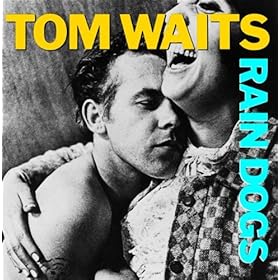
“Lyrically, Waits' songs frequently present atmospheric portrayals of grotesque, often seedy characters and places – although he has also shown a penchant for more conventional ballads. He has a cult following and has influenced subsequent songwriters despite having little radio or music video support.
His songs are best-known to the general public in the form of cover versions by more visible artists, "Jersey Girl," performed by Bruce Springsteen and "Downtown Train," performed by Rod Stewart. Although Waits' albums have met with mixed commercial success in his native United States, they have occasionally achieved gold album sales status in other countries.
He has been nominated for a number of major music awards and has won Grammy Awards for two albums, Bone Machine and Mule Variations.
Waits wrote the majority of the album [Rain Dogs] in a two month stint in the fall of 1984 in a basement room at the corner of Washington and Horatio Streets in Manhattan. According to Waits it was, “kind of a rough area, Lower Manhattan between Canal and 14th Street, just about a block from the river, it was a good place for me to work. Very quiet, except for the water coming through the pipes every now and then. Sort of like being in a vault.”
In preparation for the album, Waits recorded street sounds and other ambient noises on a cassette recorder in order to get the sound of the city that would be the album's subject matter.
A wide range of instruments were employed to achieve the album's sound, including marimba, accordion, double bass, trombone and banjo, indicating the many different musical directions spread across Rain Dogs. Coming as it did in the mid 1980s—when most musicians depended on synthesizers, drum machines, and studio techniques to create their music—the album is notable for its organic sound, and the means by which it was achieved.
Waits, discussing his mistrust of then fashionable studio techniques, said:
“If I want a sound, I usually feel better if I've chased it and killed it, skinned it and cooked it. Most things you can get with a button nowadays. So if I was trying for a certain drum sound, my engineer would say: "Oh, for Christ’s sake, why are we wasting our time? Let's just hit this little cup with a stick here, sample something (take a drum sound from another record) and make it bigger in the mix, don't worry about it." I'd say, "No, I would rather go in the bathroom and hit the door with a piece of two-by-four very hard.””
Tom Waits is the definition of fucking cool, the first album of many to come around here…
"The quiet kill off the country road, the time before the time when everything went wrong and the last 16 hours of that great love affair are the seminal beginnings of Oxbow. Designed to be the last aural will and testament of failed humanity, Oxbow actually garnered listeners from among the ranks of the fucked, with their 1990 release Fuckfest (cfy/pathological). Followed by King Of The Jews (cfy), The Balls In The Great Meat Grinder Collection (pathological), Let Me Be A Woman (brinkman/crippled dick hot wax) recorded by the estimable Steve Albini, Serenade In Red (SST/CDHW) also recorded by Albini and Gibbs Chapman (Faith No More, Red House Painters), An Evil Heat (neurot) by Gibbs Chapman, Love That's Last (Hydrahead) by Oxbow and the The Narcotic Story (Hydrahead) by Joe Chiccarelli (Agent Orange, Beck, American Music Club)"
Easily one of my favorite bands of all time. Love That's Last is a hypnotizing, disconcerting, coital, demented and threatening listen that leaves me wanting more. On headphones, you can practically feel lead singer Eugene Robinson eating out your ear canals before promptly battering you into the floorboards. As abusive as Oxbow can be, Love That's Last contains beautifully massive expanses of sonic delight, but is still deeply rooted to the dark bones beneath it all. Music for fighters and fuckers.
"Poignant, innovative, epic, and soulful—these are but a few of the adjectives used to describe the music of Axiom of Choice. Formed in 1992 by guitarist, composer and Artistic Director Loga Ramin Torkian and co-producer and percussionist Mammad Mohsenzadeh, the ensemble’s goal is to define a new sound within the context of Persian music. They were soon joined by vocalist Mamak Khadem whose prodigious vocal talent complemented the original compositions of Torkian.
The name of the ensemble is a mathematical term, which clearly defines their intentional freedom of choice within the parameters of their compositions and music. As artists who immigrated to the United States, Axiom of Choice incorporates the sounds of other cultures – both East and West - broadening the scope and appeal of their music while remaining loyal to their Persian roots and retaining the originality, distinctiveness and integrity of their sound. Their original compositions are mostly based on Persian melodies and modes and have universal appeal because of their cohesive, seamless and natural fusion with other styles of music.
The musicians work within a unique compositional structure in which both improvisation and personal expression can freely take place. One important goal is to make Persian music more accessible to the broader audience. The other is to communicate through a progressive and new global sound, unique to world music. Based on the quarter-tone guitar, saz, diwan (Middle Eastern lutes), Persian vocals, the Armenian duduk (oboe), clarinet, electric cello, and global percussion instruments, their sound is at the same time traditional and modern, Persian and yet global. The group’s music is self-expressive and powerful, adventurous and mysterious, contemplative and mournful, yet uplifting and cathartic.
Their first album “Beyond Denial” (X-Dot 25) was described as “Near Eastern art music, deeply moving and utterly beautiful” by Rhythm. Their second release “Niya Yesh” (Narada World) became the winner of NAV’s best contemporary world music album in 2001. They were nominated Best Recombinant World Music Ensemble in 2001 by the LA Weekly Music Awards. Their third album “Unfolding,” also on Narada World, is inspired by the Persian poet, mathematician, and astronomer Omar Khayyam and embraces his mystical poetry and vision. "
A friend gave me these guys a few years back and I've been hooked since. This is music that floats through your consciousness like a dream, it transports the listener seamlessly through gorgeous soundscapes. Multi-dimensional deity gardens, shimmering kaleidoscopic mirages of the Dar-e Anjir, Gaia gasping through a lush green oasis. Hopefully it will paint as many colors in your head than it does mine. Enjoy.
 Late Christmas present I suppose.