Sunday, December 20, 2009

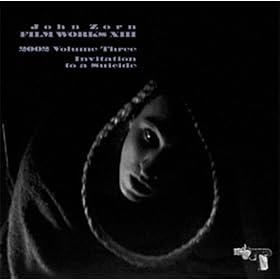
John Zorn-Invitation to Suicide


“John Zorn (born September 2, 1953 in New York City) is an American avant-garde composer, arranger, record producer, saxophonist and multi-instrumentalist. Zorn's recorded output is prolific with hundreds of album credits as a performer, composer, or producer. His work has touched on a wide range of musical genres, often within a single composition, but he is best-known for his avant-garde, jazz, improvised and contemporary classical music. Zorn has led the punk jazz band Naked City, the klezmer-influenced quartet Masada and composed the associated 'Masada Songbooks', written concert music for classical ensembles, and produced music for film and documentary. Zorn has stated that "I've got an incredibly short attention span. My music is jam-packed with information that is changing very fast... All the various styles are organically connected to one another. I'm an additive person - the entire storehouse of my knowledge informs everything I do. People are so obsessed with the surface that they can't see the connections, but they are there."”


Zorns connections are laid out as clearly as they ever will be in this record, easily one of his most accessible and mild mannered albums (excluding song "Unjust Reward" from said comment). This soundtrack is the musical narrative of the film "Invitation Suicide", a dark comedy about a son trying to save his father in the hospital by charging people money to see his suicide. There are 10 core songs in the album, each one arranged differently to create a paralleled multi-layered walk that becomes more recognized and proportionately different as the album progresses, akin to taking a stroll through a familiar park with the seasons changing in front of your eyes. My favorite work I've heard from Zorn yet.


Filmworks XIII-Invitation to Suicide

Tuesday, December 15, 2009

Pygmy Lush-Bitter River

"Sterling, Virginia's Pygmy Lush's debut album serves as the culmination of every influence these young men have ever had, all wrapped around each other in what essentially sounds like a seasoned band covering a solid mixtape. Bitter River's 14 songs span nearly the entire underground/independent music spectrum, ranging from tracks that sound like The Black Heart Procession to Born Against to Tom Waits to The Jesus Lizard to Bob Dylan to One-Eyed God Prophesy to Nirvana to... you get the picture, right?"

Just when you think you've got a grip on a song, you're pummeled by the next. At a loss of words for these guys which usually means they are really fucking good.

Hurt Everything

Friday, December 11, 2009

2 Foot Yard-Borrowed Arms


"In the days of Bach, Brahms, and Beethoven, composers used vernacular rhythms and tune styles to create something transcendentally new. That seems to be missing in much contemporary music. But Carla Kihlstedt and her 2 Foot Yard band merge fusion jazz, rock, Bulgarian-style vocals, Felliniesque vignettes, quirky Laurie Anderson-type currents, and other world, folk, and pop streams into a new sound that inventively straddles the classical and vernacular worlds without compromise to either side. Kihlstedt is a monster virtuoso on numerous instruments, a truly original songwriter, and an inventive, singular artist on a par with Arto Lindsay. If classical music has any hope of connecting with modern audiences, Kihlstedt’s battle charge will point the way."

From the moment I heard Sleepytime Gorilla Museum, I fell head over heals for Carla Kihlstedt. She is easily the most innovative, passionate, and visionary female artists I have ever heard. I'm pretty convinced I could settle down on a farm with her and die a happy man. Unfortunately or me, she recently had a beautiful baby girl, so I wish her the best for an enriching life as a mother.

ANYWAYS, her music is absolutely stunning. I cannot recommend her work enough. Much more Carla to come in the future....

This is her second album from 2 Foot Yard called "Borrowed Arms".


This borrowed heart will set me free

Wednesday, December 2, 2009

The For Carnation


"The eight minutes of Empowered Man's Blues approach slow-motion funeral music: drums hardly drum and guitars hardly ring while McMahan begins to whisper his story (think Tim Buckley fronting Portishead) but then, somehow, the dirge mutates into quasi-minimalist bass figures, dilated drumming tempos, violin wails, electronic noises, and the voice is suddenly propelled in noir melodrama (think Nick Cave sleepwalking into the set of "Twin Peaks").
The band drowns the depressed confession of A Tribute To, into a syncopated dance groove, a repetitive guitar figure and a lively repertory of ghostly noises.
Tales emerges from a nightmarish beginning to a psychological tension created by aggressive drumming and dark keyboard motives. Over eight minutes, the thick texture creates the kind of suspense that the Doors or the early Pink Floyd would generate in their extended jams. Moonbeams, the longest track at nine minutes, features the most tender melody in an extremely slow crescendo.
The light swing of Snoother is the closest thing to a conventional song. Being Held is an instrumental track that simply builds a rhythm around a ringing guitar tone. This is music of extreme patience and intelligence, that shows no passion and no emotion because it is not interested in short-term dividents but in long-term investments: only at the end of a song one realizes how many things took place, only at the end of the album one realizes how much richer the world of music has become. "

Listen

Terry Riley-In C-25th Anniversary Concert


“In C” is an ensemble piece that Riley composed on a bus trip across the U.S.A. 1964. The work was to become a gateway to the new art music of the 20th century with its brand new compositional method, and it would certainly propel the illusionistic, repetitive music that some call minimalism forward in a sudden gush of feverish activity!


The piece consists of 53 short melodic motifs around the C tonality. The simple but effective performance method means that the musicians play the 53 fragments in order, from the first one to the last, but each player repeats each motif as often as he wishes, with the restraining instruction in mind that he should at all times listen to the other players and show consideration for the collected sounding result. Each player can also refrain from playing for as long as he feels is right. When all the musicians of the ensemble has played through all the motifs and reaches the end of motif number 53, the performance is complete.

This is the secret at work in “In C”: The music is completely composed within each motif, while still allowing for interpretational freedom and choice along the time axis. Furthermore, the score is written in free instrumentation, meaning that any kinds of instruments may be used. There is neither any self-evident duration decided. Riley himself says that he could conceive of a yearlong performance, which would allow each motif a duration of about one week!

This is a kind of music that works with the microscope and the kaleidoscope! The music is shifted and layered in minute, almost unnoticeable transformations, which subject you to hallucinatory sonic illusions, in which the music is elicited of pictures that rise out of the tensions and force fields which are emerging between the tones, between the rhythms and in the overtones that hover over the expanding and contracting sound fields’ relations to each other.
"


My first listen of this album was on the L and it was one of the most powerful experiences I've had with music synchronizing with reality. As the title says, this is actually a 25th anniversary concert of In C, I actually have not even heard the studio album yet. It's a memorizing album to say the least. It's most appropriate for traveling in cities. Listen for yourself and see it intertwine into your reality as it did mine.

In C

Tuesday, December 1, 2009

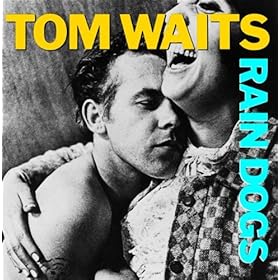
Tom Waits-Rain Dogs


“Lyrically, Waits' songs frequently present atmospheric portrayals of grotesque, often seedy characters and places – although he has also shown a penchant for more conventional ballads. He has a cult following and has influenced subsequent songwriters despite having little radio or music video support.

His songs are best-known to the general public in the form of cover versions by more visible artists, "Jersey Girl," performed by Bruce Springsteen and "Downtown Train," performed by Rod Stewart. Although Waits' albums have met with mixed commercial success in his native United States, they have occasionally achieved gold album sales status in other countries.

He has been nominated for a number of major music awards and has won Grammy Awards for two albums, Bone Machine and Mule Variations.

Waits wrote the majority of the album [Rain Dogs] in a two month stint in the fall of 1984 in a basement room at the corner of Washington and Horatio Streets in Manhattan. According to Waits it was, “kind of a rough area, Lower Manhattan between Canal and 14th Street, just about a block from the river, it was a good place for me to work. Very quiet, except for the water coming through the pipes every now and then. Sort of like being in a vault.”

In preparation for the album, Waits recorded street sounds and other ambient noises on a cassette recorder in order to get the sound of the city that would be the album's subject matter.

A wide range of instruments were employed to achieve the album's sound, including marimba, accordion, double bass, trombone and banjo, indicating the many different musical directions spread across Rain Dogs. Coming as it did in the mid 1980s—when most musicians depended on synthesizers, drum machines, and studio techniques to create their music—the album is notable for its organic sound, and the means by which it was achieved.

Waits, discussing his mistrust of then fashionable studio techniques, said:

“If I want a sound, I usually feel better if I've chased it and killed it, skinned it and cooked it. Most things you can get with a button nowadays. So if I was trying for a certain drum sound, my engineer would say: "Oh, for Christ’s sake, why are we wasting our time? Let's just hit this little cup with a stick here, sample something (take a drum sound from another record) and make it bigger in the mix, don't worry about it." I'd say, "No, I would rather go in the bathroom and hit the door with a piece of two-by-four very hard.””


Tom Waits is the definition of fucking cool, the first album of many to come around here…


Rain Dogs

Oxbow-Love That's Last: A Wholly Hypnographic & Disturbing Work Regarding Oxbow


"The quiet kill off the country road, the time before the time when everything went wrong and the last 16 hours of that great love affair are the seminal beginnings of Oxbow. Designed to be the last aural will and testament of failed humanity, Oxbow actually garnered listeners from among the ranks of the fucked, with their 1990 release Fuckfest (cfy/pathological). Followed by King Of The Jews (cfy), The Balls In The Great Meat Grinder Collection (pathological), Let Me Be A Woman (brinkman/crippled dick hot wax) recorded by the estimable Steve Albini, Serenade In Red (SST/CDHW) also recorded by Albini and Gibbs Chapman (Faith No More, Red House Painters), An Evil Heat (neurot) by Gibbs Chapman, Love That's Last (Hydrahead) by Oxbow and the The Narcotic Story (Hydrahead) by Joe Chiccarelli (Agent Orange, Beck, American Music Club)"

Easily one of my favorite bands of all time. Love That's Last is a hypnotizing, disconcerting, coital, demented and threatening listen that leaves me wanting more. On headphones, you can practically feel lead singer Eugene Robinson eating out your ear canals before promptly battering you into the floorboards. As abusive as Oxbow can be, Love That's Last contains beautifully massive expanses of sonic delight, but is still deeply rooted to the dark bones beneath it all. Music for fighters and fuckers.

Love That's Last